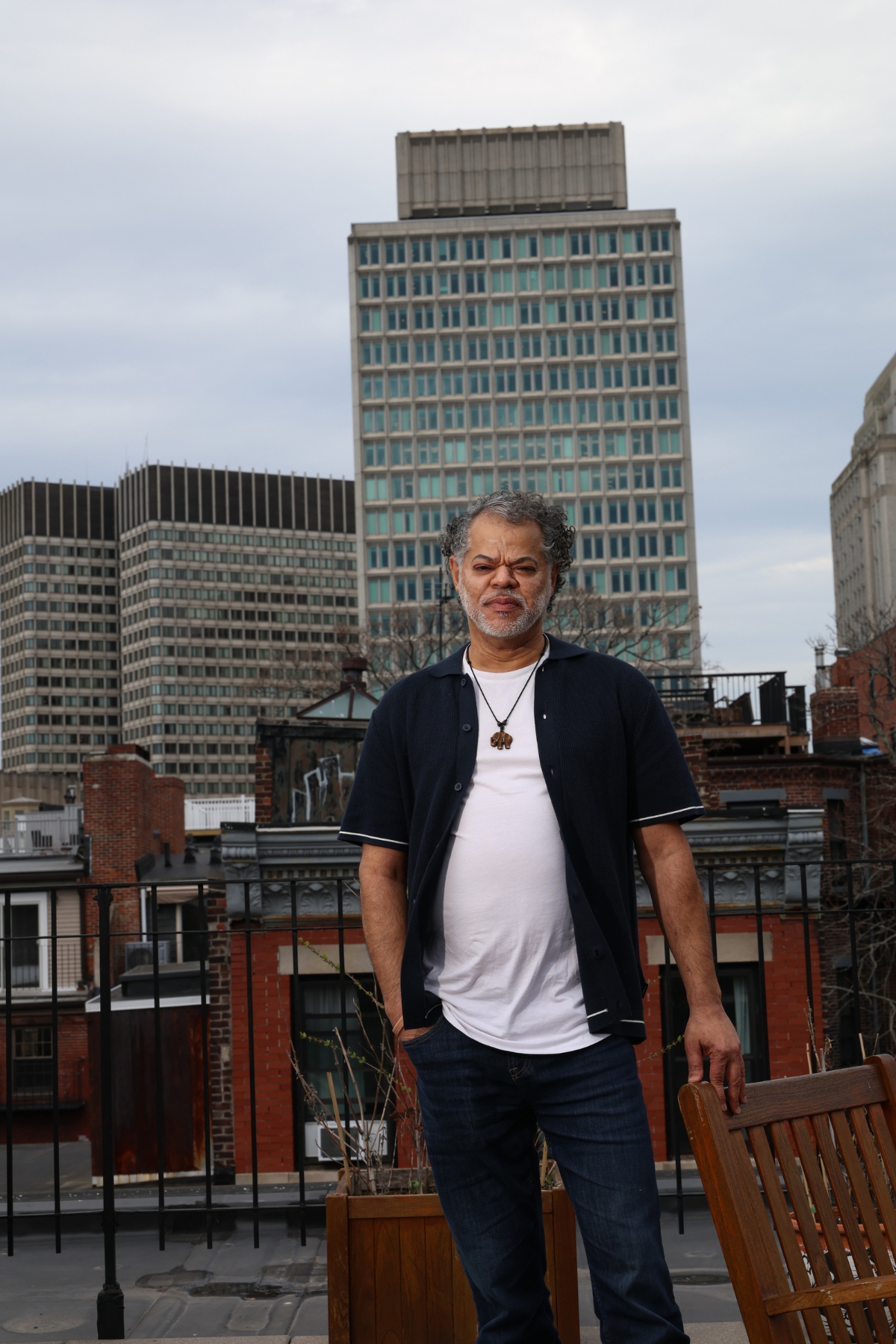
For Eduardo: A Home Where Hope Lives
There is a difference between working to make ends meet, clocking in and out of a job, and experiencing a calling—a deeply felt conviction that you are meant, fundamentally, to serve a purpose. Eduardo Pereira is one of those fortunate enough to feel that his life’s purpose has been made plain to him. Indeed, he believes it’s a purpose we all share: to use our lives for the benefit of others.
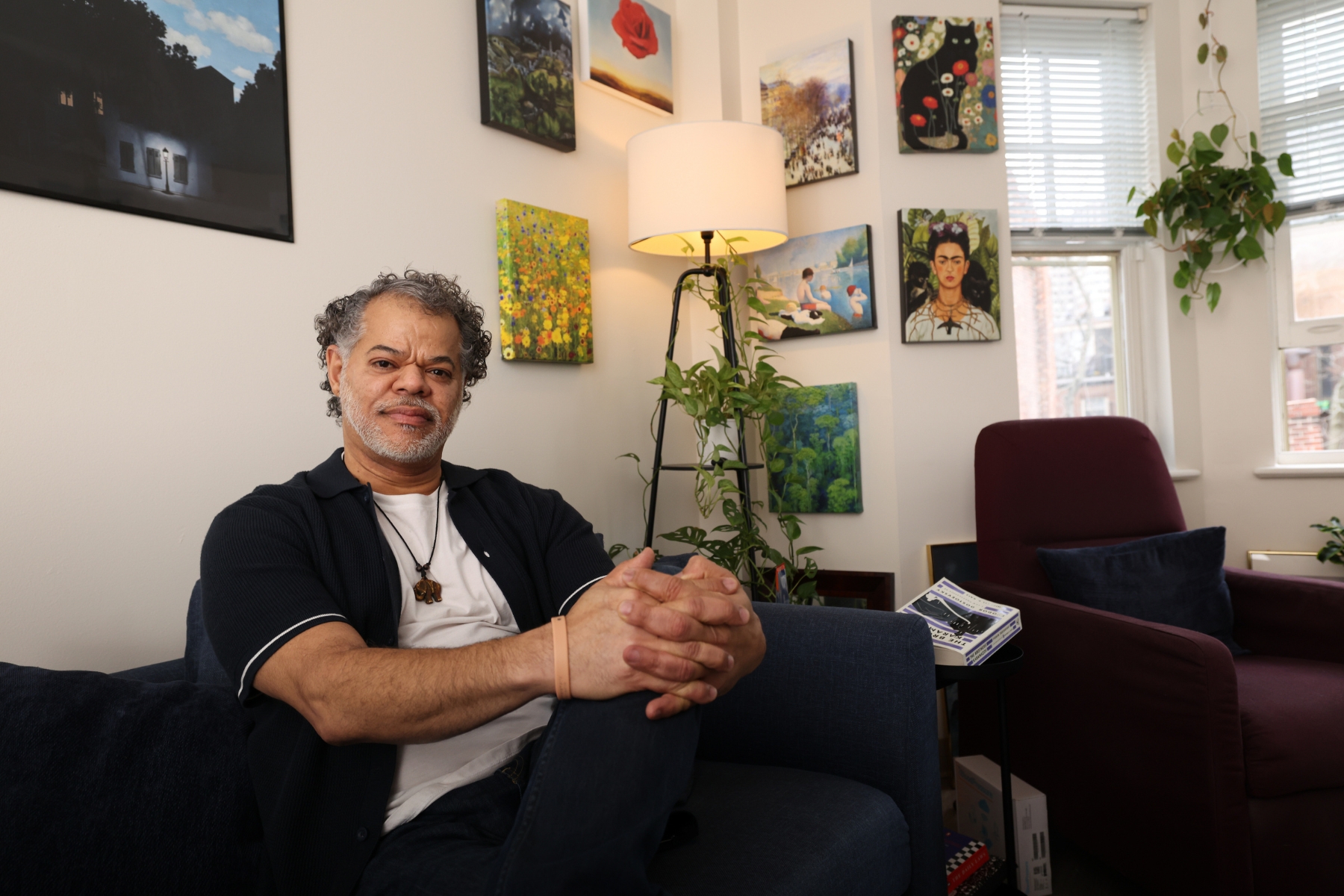
“I believe that there is no difference if I’m helping you or I’m helping myself,” he declares, sitting in his tidy, sunlit one-bedroom home at the Joy Street Residence on Beacon Hill. For him, this essential human interconnectedness mean that our actions, good or ill, ripple outward to affect those around us.
It’s not just idle talk. Eduardo has put this philosophy into practice in a literal way, building a career in human services. But there was a time in his life when he fell into desperate need of help himself.
Eduardo found employment as a case worker at a human services agency shortly after moving to Boston around 2000. He would visit clients dealing with chronic mental illness, assisting them with the tasks of daily living, making sure they could get to appointments, and staying on top of their medication regimens. After further work in a group home for women also grappling with mental illness, he was more convinced than ever that mental healthcare for low-income patients was the career he was meant to pursue.
Though fundamentally rewarding, the work was often very challenging, with long days spent in under-resourced, high-stress environments. It began to wear on him the longer he spent in the field, along with other anxieties. Originally from Brazil, Eduardo fretted over his immigration status. He felt ashamed of his HIV status, having lived with the disease since his twenties. And he was increasingly socially isolated after splitting up with his longtime partner. At this vulnerable time in his life, he found himself turning, as many do, to alcohol to help him cope. What started as a coping mechanism, however, quickly turned into a slippery slope, with highly addictive methamphetamine at the bottom.
“I started using daily in 2019, at the beginning of the summer,” he says. “By the end of the summer, I had lost my job. By March 2020, I became homeless.”
As hard as it is to imagine losing so much so quickly, it’s even harder to conceive a worse moment for it to happen: in the opening months of the COVID-19 pandemic. For weeks on end, Eduardo would search Boston looking for shelter space, denied entry from each one for lack of a negative COVID test result. Today, it can be hard to remember that testing at that time was usually found only in healthcare settings. And in the city, most of those were overwhelmed.
“At Boston Medical Center, the emergency room was outside, where the cars come in,” Eduardo recalls. “They had tents there. And they didn’t have time to deal with me—they were dealing with COVID. They told me to go to the shelter, and I said, ‘I just came from the shelter!’”
Eduardo would continue to struggle with addiction, going through repeated cycles of rehabilitation and relapse that left him unhoused most of the time, for the next two years. By July of 2022, exhausted and at the end of his rope, he had a revelation.
“I was doing my own program,” he says, explaining that he’d never committed himself fully to the recovery programs offered by rehab centers. “And my own program resulted in me homeless on Mass Ave. So I said, okay, I am going to trust my higher power. Whatever treatment that’s offered me, whatever help that I get, I will make the best of it.”
He arrived for the final time at a rehab facility in Danvers, where he’d had repeated stays, already like a different person. He threw himself into the program of recovery in a way he never had before. Staff there noticed—he won an award for his work in art therapy, and when he finally unleashed a vibrato, which he had been trying to develop for years, in music therapy, they asked to record it.
After successfully completing the rehab program, Eduardo could see a hopeful path forward for the first time in years. But he still faced one big question mark—housing. He needed to find a home that would allow him to put his life back together. While investigating lodging at a YMCA in Cambridge, a staff member told him about a community on Beacon Hill that might be a better fit: the Joy Street Residence, an affordable, sober, and drug-free independent residence for people living with HIV.
Though he was initially told the wait could be long—two to three years—he received a call within two months to tell him that a home was available for him there. When he visited to look at it, he recalls, he was shown unit 4E. It felt like the universe was telling him: “For Eduardo.”
He moved into the building three years ago and set about making it his home, applying for a grant to pay for some simple furnishings. Inspired by art, he has adorned his walls with prints of works by famous artists from Mapplethorpe to Magritte. Though he came to it through incredible hardship, he calls it the most beautiful place he has ever lived.
“This is a place where I can continue to heal and better myself, and even have beauty and hope in my life again,” he says, noting that the building is safe and well-run, putting his mind at ease.
This kind of comfort would be an end in itself for many people who had battled addiction and homelessness, but for Eduardo, it serves a higher purpose—getting him back to what he was meant to do. Since moving to Joy Street, he has completed an addictions counselor education program, and has regularly visited the rehab in Danvers that helped him, speaking to and commiserating with residents there. In large part, a stable, peaceful home enables him to do his work.
“Rogerson has made me able to thrive more, to thrive faster,” he says. “It’s priceless. I’m telling you, it’s a gift of biblical proportions. If I live for the rest of my life in this very apartment, I will consider myself hugely blessed. And I will spend the rest of my life from this apartment using my experience to help others.”